
Depth Psychotherapy Online: A Guide to Meaningful Inner Transformation

True leadership is rarely a product of external strategy, but rather a result of the quiet, often avoided confrontation with one's own unconscious. You may have found that surface-level therapy misses the point, leaving the persistent weight of self-sabotage or a sense of emotional numbness untouched. It's a common realization for high-stakes professionals that the shadow, those unacknowledged parts of the self, can quietly interfere with your capacity to lead and connect. This sense of being stuck often indicates that the soul is ready for a more thorough investigation than standard coaching can provide.
Choosing depth psychotherapy online isn't a compromise of quality; it's a deliberate step toward creating a private, focused sanctuary for profound psychological growth and shadow integration. This guide explores how you can resolve deep-seated patterns and establish a stable therapeutic anchor, all from the privacy of your own space. We'll look at the journey from feeling stuck to achieving a meaningful, long-term evolution of the self, moving beyond simple symptom relief toward a more integrated, authentic way of being.
Key Takeaways
- Learn how depth psychotherapy online utilizes the digital space to facilitate honest disclosure and access the unconscious through the disinhibition effect.
- Understand the hidden emotional architecture beneath surface symptoms, shifting focus from temporary relief to the resolution of long-term developmental patterns.
- Explore the integration of the unlived self to mitigate self-sabotage and bring unacknowledged aspects of the persona into conscious awareness.
- Recognize how "The Shadow At Work" influences professional leadership, helping high achievers navigate the plateau of meaning that often follows external success.
- Discover why a lack of a defined problem is a valid entry point for a process that prioritizes deep reflection over quick clinical fixes.
Defining Depth Psychotherapy in an Online Context
Depth work is an invitation to look beneath the immediate distress of daily life. Most people seek support when anxiety, burnout, or relationship friction become too heavy to carry, yet these symptoms are often just the visible rafters of a much larger psychological structure. To truly understand What is Depth Psychology?, one must view it as an exploration of the unconscious dimensions that govern our lived reality. At Deep Process Psychotherapy, this work is approached as a methodical inquiry into the hidden forces that shape our conscious choices. By engaging in depth psychotherapy online, you begin to map the emotional architecture that has silently directed your career, your relationships, and your self-perception for years.
This approach prioritises the unconscious dimensions of the human experience over surface-level symptom management. It assumes that our current struggles are not just problems to be solved, but messengers from a deeper part of the self. By attending to these messages, we move beyond the desire for a quick fix and toward a more profound, lasting integration of the personality.
The Distinction Between Depth and Surface Therapy
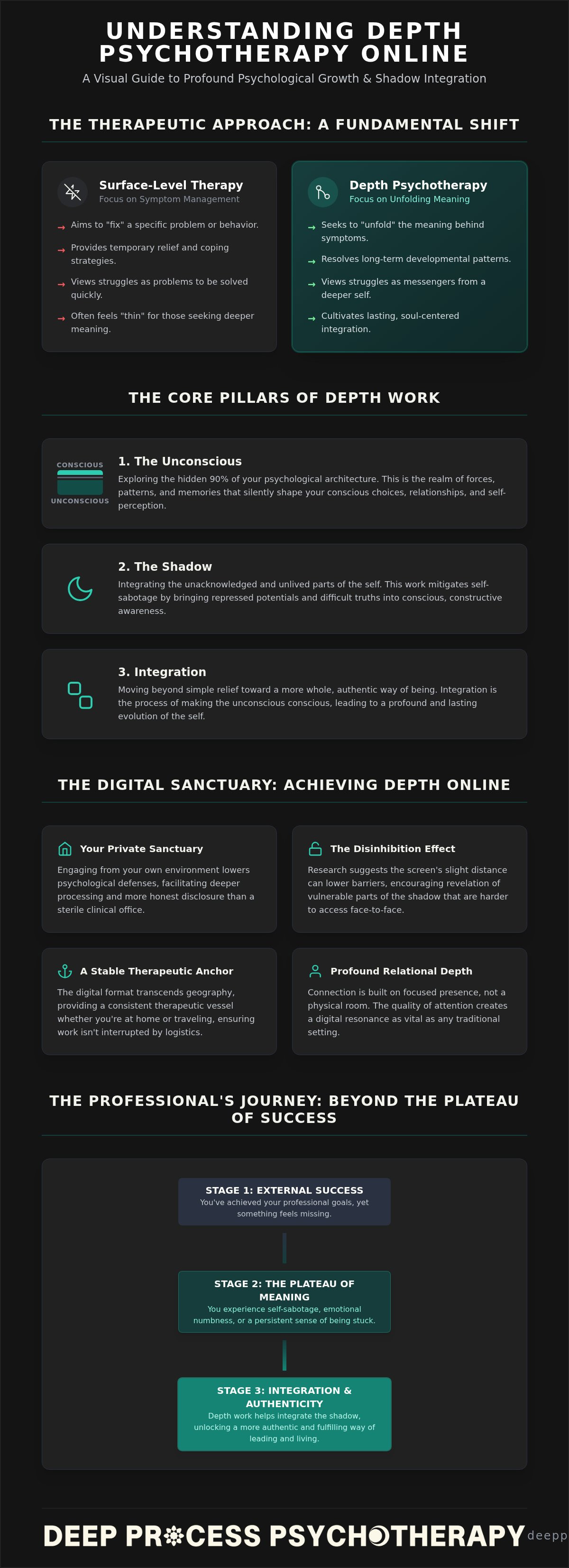
Many high achievers find that traditional coaching or cognitive interventions feel thin after a certain point. These methods often focus on fixing a specific problem or modifying a behaviour, which can provide temporary respite but rarely touches the root of the issue. Depth work shifts the focus from managing a symptom to unfolding a meaning. It requires a different pace, one that values patience and reflection over urgent results. Instead of merely silencing a difficult emotion, we ask what that emotion is trying to communicate. This shift from "fixing" to "unfolding" allows for a transformation that is not just functional, but soul-centred and enduring.
The Digital Sanctuary: Why Online Therapy Works
There is a particular intimacy found in doing this work from your own environment. Engaging in depth psychotherapy online with Deep Process Psychotherapy allows you to remain in your own sanctuary, where your psychological defences are often naturally lower than in a sterile clinical office. This sense of safety facilitates a deeper level of processing and honest disclosure. For professionals across the UK, this digital format provides a steady anchor that transcends geographic barriers. Whether you are at home or travelling for work, the consistency of the therapeutic vessel remains intact. This accessibility ensures that the long-term work of inner transformation isn't interrupted by the logistics of a demanding life, allowing the screen to become a focused portal for self-discovery.
The Relational Reality: Achieving Depth Through the Digital Screen
Skepticism regarding digital connection is natural. We often wonder if a pixelated image can truly carry the weight of the unconscious or if the screen acts as a barrier to the soul. However, the therapeutic vessel is defined by the quality of attention rather than the physical dimensions of a room. When engaging in depth psychotherapy online, the alliance relies on a shared commitment to the truth. The "online disinhibition effect" plays a significant role here. Research suggests that the slight distance provided by the screen can actually lower psychological barriers, encouraging individuals to reveal parts of their shadow that might feel too vulnerable in a face-to-face encounter.
Relational depth isn't a matter of geography. It is the result of focused presence and the guide's ability to hold space for the patient's internal world. By attending to the Core Pillars of Depth Work, such as the nuances of dreams and internal imagery, the guide and the individual create a bridge that transcends physical space. This digital resonance allows for a profound connection that feels as immediate and vital as any traditional setting.
Facilitating Intimacy in a Virtual Space
Intimacy in the digital room is built through subtle, intentional cues. The cadence of a voice, the focus of eye contact, or the weight of a shared silence carries immense psychological data. These moments of stillness are where the unconscious often speaks loudest. Clinical studies, including reports from the American Psychological Association, indicate that online outcomes for long-term developmental transitions are equivalent to in-person work. To support this, it's helpful to create a dedicated "internal space" before and after a call. This quiet transition allows for the integration of the work, ensuring the insights don't vanish the moment the laptop closes.
Overcoming Common Digital Inhibitions
The "therapeutic frame" must be protected from technical friction to maintain a sense of safety. A stable connection and a private, uninterrupted environment are the foundations of this digital sanctuary. Without these, the deep process can be easily interrupted by the external world. A wise guide manages this distance by establishing clear boundaries and maintaining a steady, professional presence. When these logistics are handled with care, the screen disappears, leaving only the work of the self. Engaging in depth psychotherapy online provides the necessary containment for this long-term evolution to occur. If you are ready to explore these internal landscapes, beginning 1:1 therapy offers a structured path toward understanding.
The Core Pillars of Depth Work: Shadow, Unconscious, and Integration
The internal landscape is governed by structures that remain largely invisible until we choose to look. In the practice of depth psychotherapy online, we focus on three primary pillars that define the human experience: the unconscious, the shadow, and the false self. These aren't merely abstract concepts but active forces that dictate your daily reactions and conscious choices. When you feel a persistent sense of emotional numbness or find yourself repeating the same mistakes in high-stakes environments, it's often because these hidden dimensions are seeking expression. To move toward a state of wholeness, we must engage in a symbolic life, using dreams, imagery, and reflection to access truths that logic alone cannot reach.
The psychological cost of professional and social adaptation often results in the creation of a "false self." This persona is a necessary tool for navigating the world, yet when it becomes the only way you know how to exist, the result is a profound sense of emptiness. Depth work seeks to bridge the gap between this external mask and your authentic internal reality. By creating a private vessel for this inquiry, you can begin to peel back the layers of adaptation and rediscover the vital parts of your personality that have been sidelined for the sake of success.
Navigating the Unconscious Mind
Recurring "stuckness" is rarely a failure of will; it is usually a signal from the unconscious. This reservoir of past experiences and unacknowledged desires often manifests as unconscious self-sabotage, particularly when the stakes are high. In a career context, this might look like a sudden loss of confidence before a promotion or a pattern of conflict with peers. By uncovering these hidden patterns, you shift from a state of reactive habit to one of intentional, integrated action. The process is methodical and requires a steady, professional anchor to ensure the exploration remains grounded and productive.
The Process of Shadow Integration
The "Shadow" is not a collection of evil traits, but rather the unlived self-the parts of your personality that were deemed unacceptable or unnecessary during your development. Bringing these aspects into conscious awareness is the essence of shadow integration. For those in leadership roles, this work is essential. Unintegrated shadow patterns often manifest in team dynamics as projection or defensive posturing. Engaging in depth psychotherapy online allows you to do this work within your own sanctuary, facilitating a long-term evolution of character. True integration leads to increased emotional intelligence and a more stable leadership capacity, moving you beyond the myth of the "quick fix" toward genuine psychological maturity.
Addressing the Professional Shadow: Depth Therapy for High Achievers
High success often masks a quiet crisis. Many high achievers frequently encounter a plateau of meaning where external accolades no longer suffice to silence internal unrest. This isn't just burnout in the traditional sense; it's a structural tension between the persona, the mask we wear for the world, and the unconscious, which holds our unexpressed needs and fears. Through depth psychotherapy online, these hidden patterns are brought into the light, allowing for a more conscious approach to both life and leadership. The Shadow At Work framework helps professionals identify their blind spots by illuminating the hidden dynamics that influence their leadership style and organisational culture.
Psychotherapy for career burnout looks beyond physical exhaustion to address the underlying psychological causes, such as the depletion of the soul when the false self has been in control for too long. When we ignore the messages of the unconscious, the shadow begins to manifest in team dynamics as friction, defensive reactions, or persistent self-sabotage in high-stakes environments. Addressing these issues requires a steady, professional anchor to ensure the exploration remains grounded and productive.
The Burden of the Overachiever
Overachievement is often a sophisticated adaptation to early-life pressures. High-functioning anxiety drives the constant doing, yet it often leaves the being malnourished and neglected. This creates an unlived life that eventually demands attention through exhaustion or a loss of purpose. Transitioning from constant activity to deep process work allows for a rebalancing of the self. By engaging in depth psychotherapy online, you can begin to peel back the layers of adaptation and rediscover the vital parts of your personality that have been sidelined for the sake of success.
Leadership and the Unconscious
A leader's shadow can create significant friction within an organisation, often manifesting as projection or an unconscious need for control. Enhancing emotional intelligence requires more than just skill-building; it requires deep psychological inquiry into how your internal landscape shapes your external reality. While corporate workshops serve as a valuable gateway to this material, the most profound shifts occur in the sustained engagement of individual work. To move beyond surface-level management of these patterns, engaging in 1:1 therapy provides the necessary anchor for professional and personal integration.
Embarking on the Process: Practical Steps for Online Engagement
Entering into depth psychotherapy online does not require a crisis or a clearly defined list of symptoms. Often, the most profound work begins with a vague sense of being "lost" or a realization that external achievements haven't brought the expected internal peace. This feeling isn't a failure of character; it's an invitation from the unconscious to begin a more serious investigation of the self. The first step is simply the willingness to sit with this uncertainty and allow a deeper meaning to unfold within the safety of a professional relationship. By creating this dedicated space, you acknowledge that your internal life deserves the same rigour and attention as your professional career.
Commitment to the process is the foundation of the therapeutic container. Unlike short-term interventions that focus on immediate relief, depth work relies on consistency over time to facilitate genuine developmental transitions. This long-term engagement provides the stability needed to explore the shadow and integrate unacknowledged parts of the persona. It's through this steady, methodical approach that the most enduring shifts in character and perspective occur, moving you toward a state of psychological wholeness.
What Happens in a Session?
In the digital room, the session follows a rhythmic quality that prioritises reflection over reaction. You'll find space for free association, where thoughts and images are allowed to move without the immediate pressure of a "solution." The wise guide provides a steady, intellectual presence, balancing clinical authority with a shared sense of humanity. This isn't a high-energy exchange but a calm, steady atmosphere where internal shifts are given the time they need to take root. Engaging in depth psychotherapy online allows this work to happen at a pace that respects your individual needs, ensuring that every insight is thoroughly considered and integrated.
Next Steps for Your Inner Journey
Transitioning from intellectual curiosity to lived experience is the core of this developmental journey. If you feel called to this work, the most direct path is to book an initial 1:1 therapy session. This creates the private vessel necessary for deep exploration and the resolution of unconscious patterns. For those who wish to engage with these concepts further, the Substack Newsletter and the publication The Shadow At Work offer specialized resources for navigating complex internal landscapes. This is an invitation to a partnership that values intellectual weight and emotional depth, providing a stable anchor as you navigate the long-term evolution of the individual.
The Path Toward Psychological Wholeness
True transformation is a methodical unfolding of the self rather than a series of quick adjustments. By choosing depth psychotherapy online, you establish a dedicated vessel for exploring the unconscious patterns that have quietly shaped your professional and personal reality. This work moves beyond the temporary relief of surface symptoms, offering instead a stable anchor for the long-term integration of the shadow. As a specialist in depth psychology for high achievers and the founder of "The Shadow At Work," I provide national UK-wide professional support for those ready to navigate their complex internal landscapes with patience and rigour.
The transition from feeling lost to achieving a sense of wholeness requires a steady, intellectual partnership. It's a journey that demands serious reflection, yet it promises a life of greater authenticity and leadership capacity. If you're ready to look beneath the persona and address the unlived aspects of your character, the invitation is open. You don't have to navigate these profound emotional territories alone. Begin your journey with 1:1 online therapy and discover the meaning hidden within your own internal sanctuary.
Frequently Asked Questions
Is online depth psychotherapy as effective as in-person therapy?
Online depth psychotherapy is widely recognized as being as effective as traditional in-person work, with clinical research indicating comparable outcomes for long-term psychological development. The digital screen often facilitates a unique sense of safety, allowing individuals to lower their psychological defenses from the comfort of their own sanctuary. This focused presence ensures that the therapeutic alliance remains the primary driver of transformation, regardless of physical proximity or geographic location within the UK.
How long does depth psychotherapy usually take to see results?
Depth work is a methodical process that prioritizes long-term developmental transitions over immediate symptom relief. While some individuals notice a shift in perspective within the first few months, meaningful inner transformation typically requires a sustained commitment of a year or more. This pace allows for the gradual unfolding of the unconscious and the thorough integration of the shadow self. It's a journey of depth that respects the soul's need for time and reflection.
Do I need to have a specific mental health diagnosis to start?
You don't need a formal clinical diagnosis to begin depth psychotherapy online. Many high achievers seek this approach when they encounter a plateau of meaning or a sense of emotional numbness that doesn't fit into a standard psychiatric category. The work is less about treating a disorder and more about investigating the hidden forces that shape your conscious life. A vague sense of being lost or stuck is a valid starting point for this inquiry.
What is the difference between depth psychotherapy and coaching?
While coaching often focuses on external strategies and future goals, depth psychotherapy addresses the unconscious architecture beneath your daily actions. Coaching is frequently directive and performance-oriented; however, depth work is introspective and investigative. It seeks to uncover the root causes of recurring patterns rather than simply modifying behavior. By exploring the shadow and the false self, depth therapy facilitates a more profound integration of the personality that coaching rarely touches.
Can depth psychotherapy help with professional burnout and self-sabotage?
Depth therapy is particularly effective for addressing professional burnout and persistent self-sabotage by looking beyond physical exhaustion to the underlying psychological causes. These issues are often signals from the unconscious that the persona has become too detached from the authentic self. Through the "The Shadow At Work" framework, professionals can identify their blind spots and resolve the internal tensions that manifest as friction in leadership roles or high-stakes career environments.
What technology do I need for online depth psychotherapy sessions?
The technical requirements for engaging in depth psychotherapy online are minimal but essential for maintaining the therapeutic frame. You'll need a stable internet connection, a device with a functional camera and microphone, and a private, uninterrupted space where you feel safe to speak openly. Utilizing a laptop or tablet is often preferable to a smartphone to ensure a steady visual field. These simple logistics protect the sanctuary of the session, allowing the focus to remain on the internal work.
How do I know if depth psychotherapy is the right approach for me?
Depth psychotherapy is likely the right approach if you find that surface-level interventions feel thin or if you're seeking a more soul-centered understanding of your life. It's suited for those who are ready to engage in a long-term, methodical inquiry into their own unconscious patterns. If you value philosophical depth and are willing to sit with the complexity of your internal landscape, this approach offers a stable anchor for genuine psychological growth and self-discovery.
Is shadow work safe to do in an online therapy setting?
Shadow work is entirely safe in an online setting when facilitated by a wise and seasoned guide who understands how to manage the digital distance. The key to safety lies in the strength of the therapeutic alliance and the consistency of the sessions. By establishing a secure digital sanctuary, we create the necessary containment for vulnerable parts of the self to emerge. This structured environment ensures that the integration of the shadow remains a grounded and supportive process.